Wild Plants: A Versatile Resource for Creative and Professional Workflows
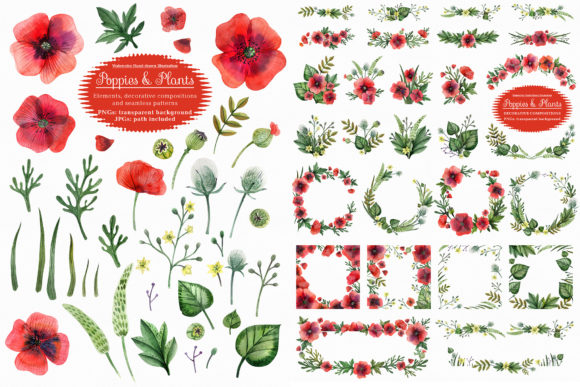
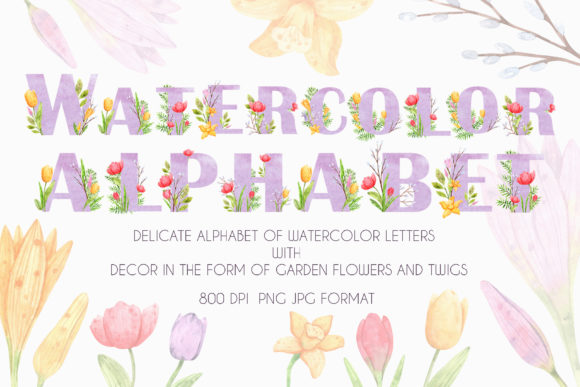
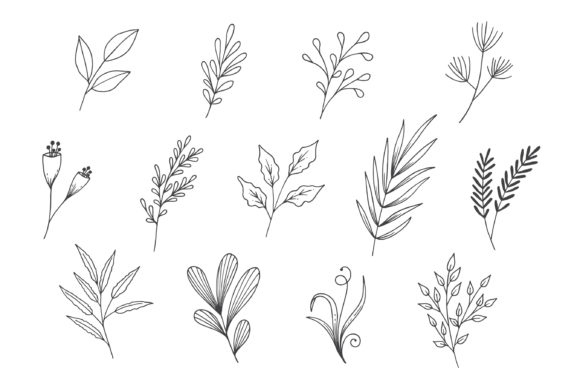
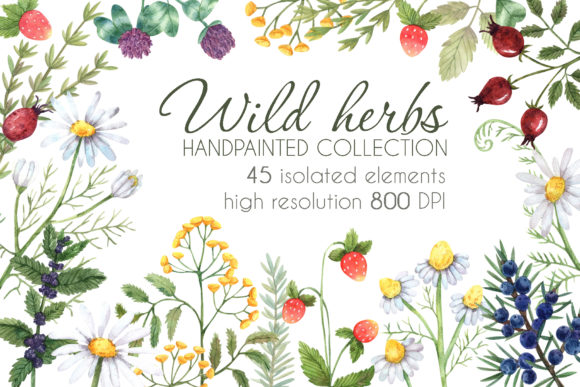
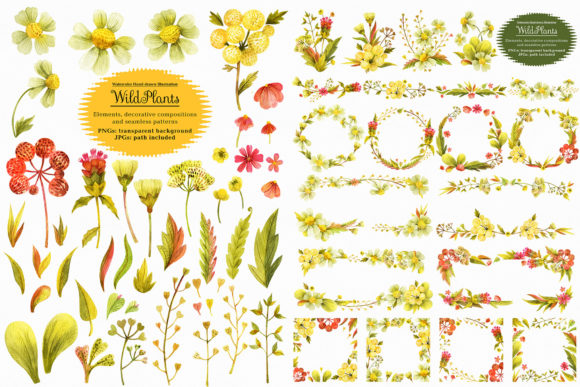
Wild Plants is a collection of stylized decorative watercolor illustrations featuring wild meadow and forest plants. Designed for creative professionals, designers, and entrepreneurs, this resource offers isolated objects, elements, and compositions suitable for banners, wreaths, frames, vignettes, boutonniere, and seamless patterns. The package includes 61 files in PNG and JPG formats, all on transparent backgrounds or with specific color schemes, making it ideal for a wide range of design applications.
This article explores how Wild Plants can be integrated into various workflows, from graphic design to branding, marketing, and even educational content creation. It also provides practical tips on using the resource efficiently and effectively.
Understanding Wild Plants and Its Components
The Wild Plants package contains a variety of file types and sizes, each serving different purposes:
- 1 PNG — Isolated Elements: A single high-resolution image (7000x7000 px) featuring individual plant elements on a transparent background. These are perfect for creating custom icons, logos, or standalone illustrations.
- 4 PNGs — Banners & Headers: Four large banner images (4000x2000 px) that can be used as headers for websites, presentations, or print materials. Their transparent backgrounds allow for easy integration with any color scheme.
- 4 PNGs — Boutonniere & Bouquets: Four detailed compositions (3000x3000 px) of floral arrangements. These are great for wedding themes, event designs, or decorative accents in digital art.
- 4 PNGs — Vignettes & Endings: Four vertical images (4000x1500 px) that serve as finishing touches for layouts, such as page endings, sidebars, or decorative borders.
- 4 PNGs — Wreaths & Round Frames: Four circular compositions (4000x4000 px) that can be used as framing elements or standalone graphics.
- 4 PNGs — Square Frames: Four square-shaped frames (4000x4000 px) for organizing content, such as photo collages, infographics, or layered designs.
- 40 JPGs — Seamless Patterns: Forty seamless pattern files (3000x3000 px), half on white and half on black backgrounds. These are ideal for textures, backgrounds, or repeating designs in web and print media.
Each element is designed with a focus on versatility and quality, ensuring compatibility with most design software and platforms. Whether you're working on a small project or a large-scale campaign, Wild Plants offers the right tools to enhance your visual output.
Integrating Wild Plants into Your Workflow
When incorporating Wild Plants into your workflow, consider its role at different stages of a project—before, during, and after implementation. Here's how you can use it effectively:
Before Starting a Project
Use the isolation elements and seamless patterns to create mood boards or mockups. These can help visualize the aesthetic direction of a project before diving into detailed work. For instance, if designing a brand identity, use the floral patterns to test how they align with the brand's tone and target audience.
You can also use the banners and headers as placeholders for website layouts or presentation slides. This helps streamline the planning process by providing a visual reference early on.
During the Design Process
During the execution phase, Wild Plants becomes a valuable asset for adding organic, natural elements to your designs. Use the wreaths and square frames as decorative borders or framing elements around key visuals. These add a touch of elegance without overwhelming the layout.
The vignettes and endings can be used to separate sections in long documents, blogs, or magazines. They provide visual continuity and guide the reader's eye through the content.
For digital projects, the seamless patterns are ideal for creating textured backgrounds or overlays. They can be applied to web pages, app interfaces, or social media posts to enhance the visual appeal without distracting from the main message.
After Completion
Once a project is complete, use Wild Plants for promotional materials, packaging, or branded merchandise. The boutonniere and bouquet compositions can be used as part of event branding, while the headers and banners can be repurposed for email campaigns or social media promotions.
Additionally, the seamless patterns can be used to create unique prints for notebooks, calendars, or stationery. These items not only reinforce brand identity but also offer added value to customers.
Compatibility and Usability
Wild Plants is compatible with most design software, including Adobe Photoshop, Illustrator, Canva, and Figma. The transparent backgrounds make it easy to layer elements over other designs, while the high resolution ensures clarity even when scaled up.
When using the resource, ensure that your workflow supports PNG and JPG formats. If you're working in a platform that requires vector-based assets, consider tracing the PNG elements to convert them into scalable vectors.
Organizing the files into folders based on their use (e.g., "Banners," "Patterns," "Frames") can improve efficiency, especially when working on multiple projects simultaneously. This also helps maintain consistency across different outputs.
Practical Tips for Long-Term Use
To maximize the lifespan of Wild Plants, consider the following best practices:
- Backup Files: Store the ZIP archive in a secure location, such as cloud storage or an external drive. This prevents data loss due to accidental deletion or system failure.
- Version Control: If you're modifying the original files, keep track of changes by saving new versions with clear names (e.g., "Banner_V2.png"). This helps avoid confusion when revisiting the resource later.
- Licensing: Ensure that you understand the licensing terms before using the resource commercially. Some packages may require attribution or restrict certain uses.
- Quality Checks: Before finalizing a design, review the composition to ensure that the elements from Wild Plants are properly aligned and do not detract from the overall message.
By following these tips, you can integrate Wild Plants seamlessly into your workflow and continue using it for future projects without compromising quality or efficiency.
Conclusion
Wild Plants is more than just a collection of illustrations—it's a versatile tool that enhances creativity and productivity across various industries. Whether you're a designer, marketer, educator, or entrepreneur, this resource offers the flexibility and quality needed to elevate your work.
By understanding how to use Wild Plants at different stages of a project, you can unlock new possibilities and streamline your creative process. With proper organization and maintenance, this resource will remain a valuable asset in your professional toolkit for years to come.